

Types of Motorhomes: A Complete Guide to Different Motorhome Types
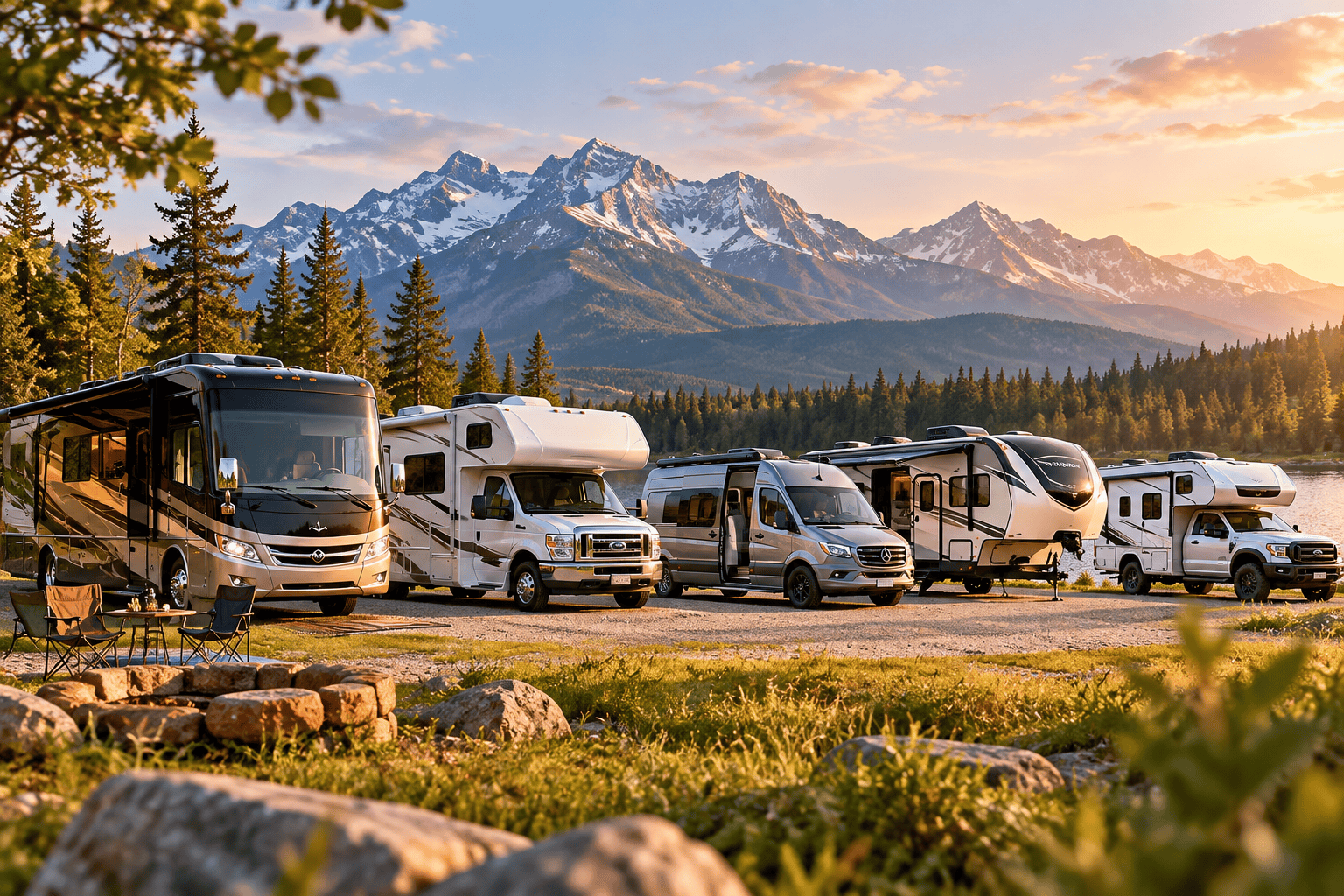
A motorhome that feels brilliant on a quiet Scottish road can become a nuisance in a packed seaside town. That is why choosing between the Types Of Motorhomes should start with your trip, not the vehicle brochure. Couples may prefer a compact layout that slips into tighter spaces, while families often need fixed beds, proper storage and enough room to survive a wet afternoon indoors.
Get the layout right, and the motorhome becomes part of the adventure rather than something you have to work around.
What are the different types of motorhomes?
The main difference is how each motorhome uses its available space. Here is the practical version:
| Type | Works well for | Watch out for |
| Campervan | Couples, solo trips | Limited interior space |
| Low-profile | Couples, small families | Fewer sleeping options than larger models |
| Overcab | Families, groups | Taller profile |
| Coachbuilt | Longer family holidays | Larger road footprint |
| A-class | Luxury touring | Size and driving requirements |
Don’t stop at the number of berths. A vehicle described as a four-berth may have a very different layout from another four-berth model.
Look at the beds, travel seats, kitchen, washroom and storage together.
What are the main types of motorhomes in the UK?
Campervans: freedom over floor space
A campervan makes sense when your holiday happens mostly outside.
You might park near the coast, make breakfast, spend the day walking and return simply to shower, eat and sleep. Its smaller dimensions can also make town visits and tighter roads less stressful.
For two people travelling light, that simplicity can be a major advantage.
Low-profile motorhomes: the middle ground
Need more than a campervan but don’t fancy driving a large family vehicle?
A low-profile motorhome can bridge that gap. Depending on the layout, you may have a separate sleeping area, kitchen, bathroom and comfortable lounge without carrying unnecessary bulk.
It is often a sensible choice for couples planning longer touring holidays.
Overcab motorhomes: clever space for families
The bed above the cab is more than a distinctive shape. It frees the main living area for daytime use.
That can be particularly useful when children need their own sleeping space and adults don’t want to fold away the lounge every evening.
There is a reason this layout remains popular with families.
Coachbuilt motorhomes: built around living
Coachbuilt models combine a cab with a dedicated living section. They can provide larger kitchens, fixed beds, washrooms and considerable storage, depending on the specification.
For a family spending several days in one vehicle, that extra usable space can matter more than flashy extras.
A-class motorhomes: space takes centre stage
A-class models have an integrated front design rather than retaining a conventional van cab. The result is usually a broad, open-feeling interior with excellent forward visibility from the living area.
They appeal to travellers who spend a lot of time touring and want the vehicle itself to feel comfortable, not merely functional.
Which type of motorhome is best for families?
Start with the people, then work backwards.
A family should check:
- Travel seats: everyone needs an appropriate belted seat.
- Beds: confirm where each person actually sleeps.
- Storage: account for clothes, food, outdoor gear and children’s belongings.
- Bathroom: consider whether an onboard toilet and shower are important.
- Payload: passengers and luggage add weight.
The last point is easy to overlook. GOV.UK states that the driving licence category required can depend on a motorhome’s Maximum Authorised Mass. Motorhomes from 3.5 to 7.5 tonnes generally fall within category C1, while heavier vehicles require category C entitlement. (GOV.UK)
A six-berth label tells you very little if the vehicle doesn’t have enough travelling seats for six people.
What is the difference between Class A, B and C motorhomes?
You may encounter these classifications when researching overseas motorhomes.
In broad terms:
Class A: large, bus-style motorhomes with integrated front sections.
Class B: van-based campervans.
Class C: van or truck-based vehicles with a distinctive overcab section.
UK rental companies commonly use different terminology, including campervan, low-profile, overcab, coachbuilt and A-class. So compare the actual vehicle rather than assuming a classification means exactly the same thing in every market.
Which motorhome is best for first-time renters?
For a first trip, smaller is often easier, but smaller is not automatically better.
A couple travelling with minimal luggage may be perfectly happy in a campervan. A family of four could find a low-profile or overcab model far more practical.
Before collecting the keys, know the vehicle’s:
- Height
- Width
- Length
- Weight
- Turning requirements
- Fuel and habitation systems
This matters on UK roads. A lane that looks harmless on a map can feel considerably narrower from the driver’s seat, particularly when bordered by stone walls and hedges.
Speed restrictions can also vary according to vehicle weight, so check the rules applying to your specific motorhome before travelling.
What type of motorhome is best for UK road trips?
Match the vehicle to the geography.
Cornwall and Devon: a manageable vehicle can be easier on narrow lanes and in busy towns.
Scottish Highlands: storage, comfortable sleeping and living space become more valuable if you are touring for several days.
Family touring: prioritise usable beds, belted seats and storage over cosmetic extras.
Short couples’ breaks: a campervan or compact low-profile model may give you greater freedom to move frequently.
Still undecided? Hire before buying.
Jepson’s Holidays is particularly relevant here because its Motorhomes for Hire and Motorhomes Hire options let travellers experience different approaches to touring before committing to ownership. If that first trip convinces you that motorhome life is for you, you can then explore its Motorhomes for Sale. Prefer staying in one place? Its Luxury holiday homes UK options provide a different style of comfortable getaway.
The right motorhome solves a specific problem
Don’t choose a motorhome because it looks impressive on a forecourt.
Choose it because you know what you need it to do.
A campervan can solve the problem of manoeuvrability. An overcab model can solve a family’s sleeping puzzle. A larger coachbuilt can make a longer trip far more comfortable.
The best choice is the one that makes your particular route easier.
FAQs
What are the different types of motorhomes?
The main UK options include campervans, low-profile, overcab, coachbuilt and A-class motorhomes.
Which type of motorhome is best for families?
Overcab and larger coachbuilt models often work well because they provide flexible sleeping and living arrangements.
Which motorhome is best for first-time renters?
A compact campervan or low-profile model can be easier to manage, depending on your group and route.
What should I check before hiring a motorhome?
Check the travel seats, berths, dimensions, weight, storage, facilities, insurance and licence requirements.
What type of motorhome is best for UK road trips?
There is no single answer. Choose based on road conditions, passenger numbers, trip length, storage needs and how often you plan to move.