

Which Motorhome Layout Is Best for Long Trips? Comfort, Storage & Sleeping Space
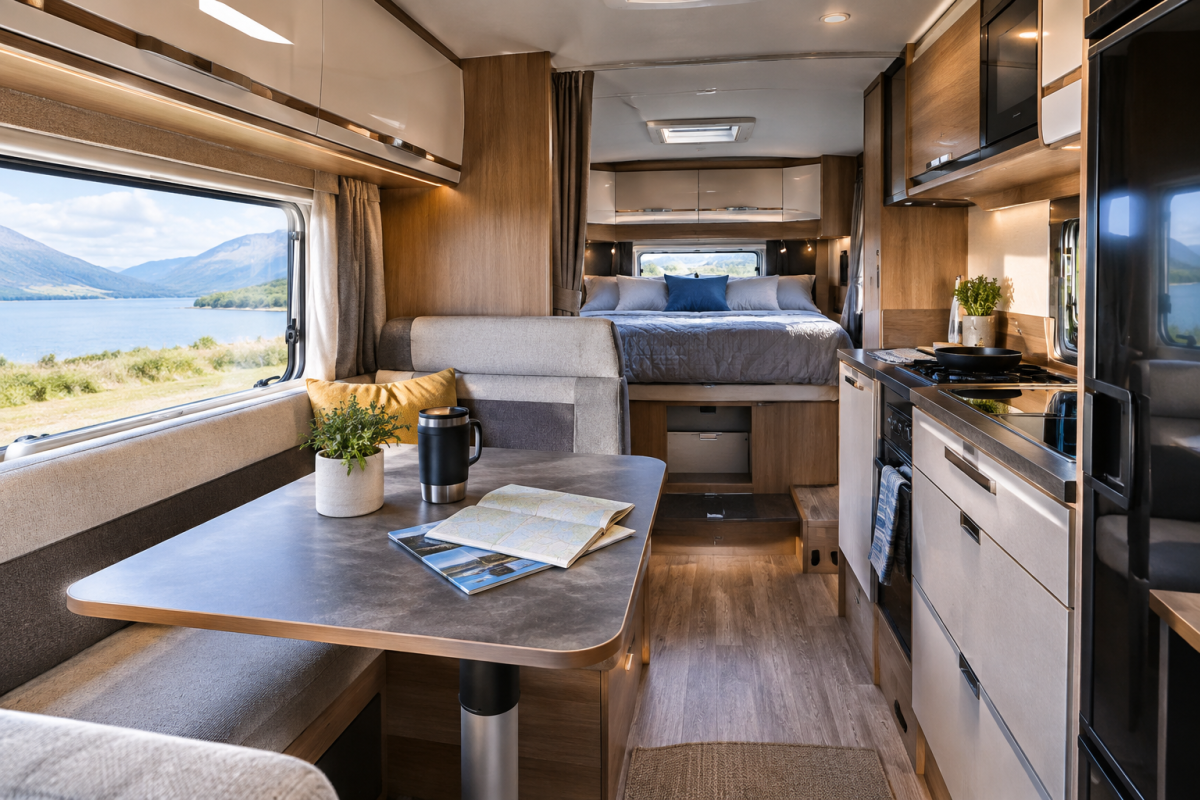
A motorhome that works beautifully for a two-night escape can become frustrating on a three-week tour. For longer trips, the right motorhome layout is the one that makes sleeping, cooking, relaxing and storing your belongings feel easy day after day. Couples often value a permanent bed, families need flexible sleeping arrangements, while cyclists, walkers and pet owners may care more about garage and storage space. The trick is matching the floorplan to how you actually travel.
The Best Layout Depends on Your Holiday
Forget the phrase “best motorhome layout” for a moment.
Ask instead: What will we be doing inside this motorhome every day?
| If your priority is… | Look closely at… |
| Easy nights for two | Fixed island or single beds |
| Maximum daytime space | Drop-down bed or rear lounge |
| Family flexibility | Over-cab, drop-down or convertible beds |
| Bikes and outdoor gear | Fixed bed with garage |
| Entertaining or relaxing | Rear lounge layout |
| Frequent bed-making avoidance | Permanent or drop-down bed |
There is no universal winner. Different layouts solve different problems.
For Couples, Start With the Bed
If two people are travelling for weeks, a fixed bed can be worth the space it occupies.
An island bed is particularly convenient because both sleepers can usually access their side without climbing over one another. Underneath, there may also be substantial storage, sometimes extending into a garage suitable for bikes and outdoor equipment.
That sounds like a small luxury.
After the tenth night, it can feel like a necessity.
Twin single beds are another option for couples who prefer separate sleeping spaces. They can also make getting in and out easier, especially when one person tends to wake earlier.
Check the actual mattress dimensions, though. Motorhome beds can look generous on a floorplan while feeling noticeably tighter in person.
Need More Living Space? Look Up
A drop-down bed changes the equation
Instead of permanently using floor space for a bedroom, the bed lifts above the lounge during the day. Lower it at night and you have a proper sleeping area without converting the whole seating space.
That makes this layout particularly useful for couples who want a roomy lounge, or families who need extra sleeping capacity without dedicating the entire rear of the vehicle to beds. Drop-down beds have also expanded the choice of compact front-lounge layouts.
There is one catch.
When the bed comes down, it can reduce access to the lounge. Check the space in both modes before deciding.
Families Should Count Seats, Not Just Beds
“Four berth” sounds reassuring.
But it only describes sleeping capacity.
A family also needs enough approved travelling seats, sensible access and somewhere for everyone’s belongings. Some four-berth layouts combine an over-cab double with a lounge that converts into another bed, while others use drop-down beds or bunk arrangements.
Jepson’s current Skiddaw is a useful example. It has four seatbelts, a rear lounge that converts into a double bed and an additional over-cab double bed.
For families, check these three numbers separately:
Berths: How many people can sleep?
Travel seats: How many can legally travel?
Storage: Where will everyone’s stuff actually go?
Those numbers do not always match.
Long Trips Expose Bad Storage
Packing for a weekend is easy.
Packing for three weeks is where the floorplan gets tested.
Think about walking boots, coats, food, outdoor furniture, bedding, children’s belongings, dog equipment and sports gear. A layout that looks spacious when empty may feel very different once everything is aboard.
A fixed rear bed can be useful because the area underneath may become a large storage locker or garage. But layouts without fixed beds can sometimes provide more open living space. It is a trade-off, and there is no way around it.
Before choosing, ask:
- Can bulky equipment fit through the storage door?
- Where will bedding go if the lounge becomes a bed?
- Is there enough wardrobe space for everyone?
- Can wet coats and muddy boots stay away from the living area?
- Can you reach frequently used items without unloading everything?
For active travellers, access matters as much as capacity.
Then Test the Kitchen and Bathroom
These are easy to overlook when you’re admiring the upholstery.
Open every cupboard. Stand at the kitchen worktop. Sit on the toilet. Step into the shower. Try moving around while another person is cooking.
Why?
Because a layout that works for two people standing still may feel completely different when four people are preparing breakfast.
For a long trip, those few centimetres of walkway can matter more than another decorative feature.
Bigger Does Not Always Mean Better
A larger motorhome can offer more beds, storage and living space, but size brings practical considerations too.
UK driving requirements depend on the vehicle’s Maximum Authorised Mass. GOV.UK states that a motorhome between 3.5 and 7.5 tonnes requires a Category C1 licence, while vehicles over 7.5 tonnes require Category C.
So before falling for the biggest floorplan, check your licence entitlement, vehicle weight and the payload available for passengers and luggage.
The Smartest Test Is a Real Trip
Still stuck between two layouts?
Try Motorhomes for Hire first.
Spend several days living with the bed, kitchen, storage and bathroom. Pack the way you normally would. Cook a proper meal. Bring the dog. Use the shower. Then see how the layout feels after a few ordinary mornings.
Jepson’s offers both Motorhomes for Sale and motorhome hire, making it possible to explore the practical difference before committing to ownership.
So, Which Motorhome Layout Is Best for Long Trips?
For couples, fixed island or single beds can make extended travel easier. Drop-down beds suit travellers who want more daytime floor space. Families need to balance berths with travel seats, while adventure travellers should pay close attention to garage size and access.
The best layout is the one that removes the daily annoyances.
Because on a long road trip, comfort is not about having the fanciest interior. It is being able to make breakfast while someone else gets dressed, find the walking boots without unpacking the whole garage, and go to bed without rebuilding the lounge every night.
FAQs
Which motorhome layout is best for long trips?
Choose a layout based on your travelling group, sleeping preferences, storage needs and how much time you expect to spend inside.
What motorhome layout suits couples on extended journeys?
Fixed island or single beds can work well because they provide ready-to-use sleeping space and can offer useful storage underneath.
Are drop-down beds good for long road trips?
They can be. They preserve daytime living space, although you should check how much lounge access remains when the bed is lowered.
How does layout affect motorhome storage?
Bed position, garage design and cupboard placement can significantly change how easily you store bikes, luggage, food, clothing and outdoor equipment.
Should I hire a motorhome before buying one?
Hiring is a practical way to test a layout in real conditions before choosing a vehicle for longer-term ownership.