

What Driving Licence Do I Need to Drive a Motorhome in the UK? (2026 Guide)
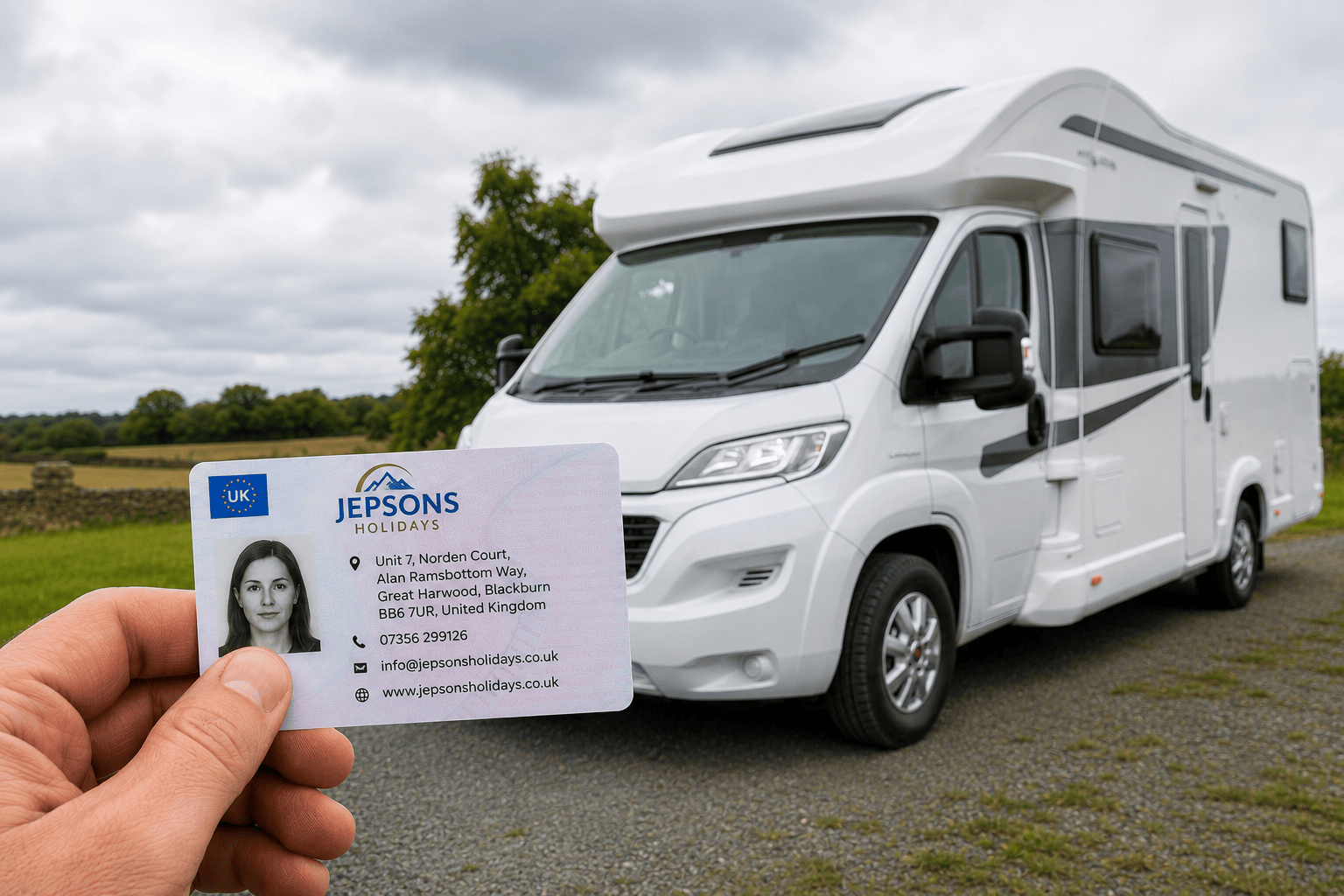
Planning a road trip through the rolling Scottish Highlands, cruising along the Cornish coast, or parking up near some of the finest luxury holiday homes UK travellers rave about is the ultimate staycation dream.
There is nothing quite like having your own bedroom, kitchen, and lounge on wheels. However, before you start packing your bags and comparing motorhomes for hire, there is one crucial question you need to clear up: what driving licence do I need to drive a motorhome?
Navigating the UK’s driving rules can feel a bit confusing with terms like MAM, Category B, and C1 thrown around. But don’t worry, the rules are actually quite straightforward once you know what to look for on your photocard. This 2026 guide breaks down everything you need to know so that you can get on the road with complete peace of mind.
The Golden Rule: It All Comes Down to Weight
When figuring out what driving licence do I need to drive a motorhome, the single most important factor is weight. Specifically, you need to check the vehicle’s Maximum Authorised Mass (MAM), which is also referred to as Gross Vehicle Weight or Maximum Allowable Mass.
MAM isn’t just what the vehicle weighs empty on a scale. It is the absolute maximum legal weight of the motorhome when it is fully loaded with fuel, fresh water, luggage, bikes, camping gear, and passengers.
You can easily find this number stamped on the vehicle’s chassis plate or listed in its registration documents. The magic dividing line in UK law is 3,500kg. Anything weighing 3,500kg or less sits in one category, while vehicles between 3,500kg and 7,500kg fall into another.
Category B: Passed Your Test On or After January 1, 1997
If you passed your standard UK car driving test on or after 1st January 1997, your photocard automatically gives you a Category B licence. With a standard Category B licence, you can legally drive any motorhome or campervan with a MAM of up to 3,500kg.
The good news? The vast majority of modern campervans, panel van conversions, and compact coachbuilt motorhomes are specifically engineered by manufacturers to stay under this 3,500kg threshold. It means if you are looking at standard motorhomes hire options for a weekend getaway, your regular car licence will almost certainly cover you.
However, keep payload in mind! A motorhome with a 3,500kg limit might only weigh 3,100kg empty, giving you 400kg of wiggle room for your family, suitcases, and full water tanks. Overloading a 3.5-tonne vehicle makes it illegal to drive on a Category B licence.
Category C1: Passed Your Test Before January 1, 1997
If you passed your driving test prior to 1st January 1997, you were granted what the motoring world calls “grandfather rights”. Your licence automatically includes the Category C1 entitlement alongside Category B.
So, what driving licence do I need to drive a motorhome if it exceeds 3.5 tonnes? As a pre-1997 driver, your C1 entitlement lets you drive motorhomes weighing anywhere between 3,500kg and 7,500kg without having to sit any extra driving tests.
This opens up a world of larger coachbuilt models, heavy tag-axle vehicles, and even the most luxurious motorhome liners featuring slide-out living rooms, king-sized beds, and spacious ensuite bathrooms.
Need a Heavier Motorhome but Passed After 1997? Here’s How to Get C1
If you passed your test after 1997 and have your eye on a large 4.2-tonne family cruiser, you aren’t out of luck. You just need to upgrade your licence to Category C1. Getting a C1 entitlement involves a few simple steps:
- Medical Examination: Have a doctor complete a DVLA D4 medical assessment to confirm your eyesight and general health meet medium-goods vehicle standards.
- Apply for Provisional C1: Send off DVLA forms D2 and D4 to add provisional C1 rights to your licence.
- Pass the Theory Tests: Complete the C1 multiple-choice and hazard perception theory exams.
- Practical Training & Test: Book a short training course with a professional instructor and pass the practical C1 driving test.
Once completed, you will be fully qualified to drive vehicles up to 7,500kg.
What Happens When You Turn 70?
Age plays a key role in motorhome licensing. When you reach age 70 in the UK, your standard driving licence expires and must be renewed with the DVLA every three years. If you rely on pre-1997 C1 rights to drive a heavy vehicle, note that standard age-70 online renewals automatically drop the C1 category, leaving you with Category B (up to 3,500kg).
To retain your C1 entitlement after 70, you must submit a medical report form (D4) filled out by a doctor. If you prefer to skip the medical admin, simply opting for motorhomes with a 3,500kg limit makes life much simpler.
Renting vs. Buying: Practical Tips for Road-Trippers
If you are exploring rental motorhomes across England, Wales, or Scotland, rental agencies make checking your licence painless. Most rental fleets deliberately stock 3,500kg vehicles so anyone with a standard Category B licence can jump in and drive away. Before booking your trip, keep these quick tips in mind:
- Generate a DVLA Check Code: Rental companies will ask for an online code to view your official driving record and check for endorsements.
- Double-Check Age Requirements: Even if your licence legally allows you to drive a vehicle, hiring companies often set their own minimum age limits (usually 21 or 25) for insurance purposes.
- Match the Vehicle to Your Experience: If it is your first time driving a large leisure vehicle, starting with a 3.5-tonne model on a Category B licence is a fantastic way to gain confidence on narrow country lanes.
When you double-check your paperwork early, answering what driving licence do I need to drive a motorhome becomes second nature. That leaves you free to focus on mapping out your scenic route, picking out coastal campsites, and enjoying the open road.
Conclusion
Choosing the right leisure vehicle ultimately comes down to knowing what driving licence do I need to drive a motorhome before you set off on your next UK getaway. Once you match your driving entitlements with your vehicle’s weight limit, you can hit the open road with complete confidence and enjoy a stress-free travel experience.
FAQs
What driving licence do I need to drive a motorhome in the UK?
You need a standard Category B licence for motorhomes up to 3,500kg MAM, or a Category C1 licence for vehicles weighing between 3,500kg and 7,500kg.
Can I drive a 3.5 tonne motorhome on a standard UK licence?
Yes, anyone holding a valid full UK Category B car licence can legally drive a motorhome weighing up to 3,500kg (3.5 tonnes).
Do I need a C1 licence for a motorhome in the UK?
You only need a C1 licence if the motorhome’s Maximum Authorised Mass (MAM) exceeds 3,500kg.
What motorhome can I drive with a Category B licence?
A Category B licence permits you to drive any motorhome or campervan with a maximum fully loaded weight (MAM) of up to 3,500kg.
Can I drive a motorhome if I passed my test before 1997?
Yes, passing before 1st January 1997 automatically gives you Category C1 rights to drive motorhomes up to 7,500kg without taking an extra test.