

Campervan Holiday Checklist: Everything You Need Before You Go
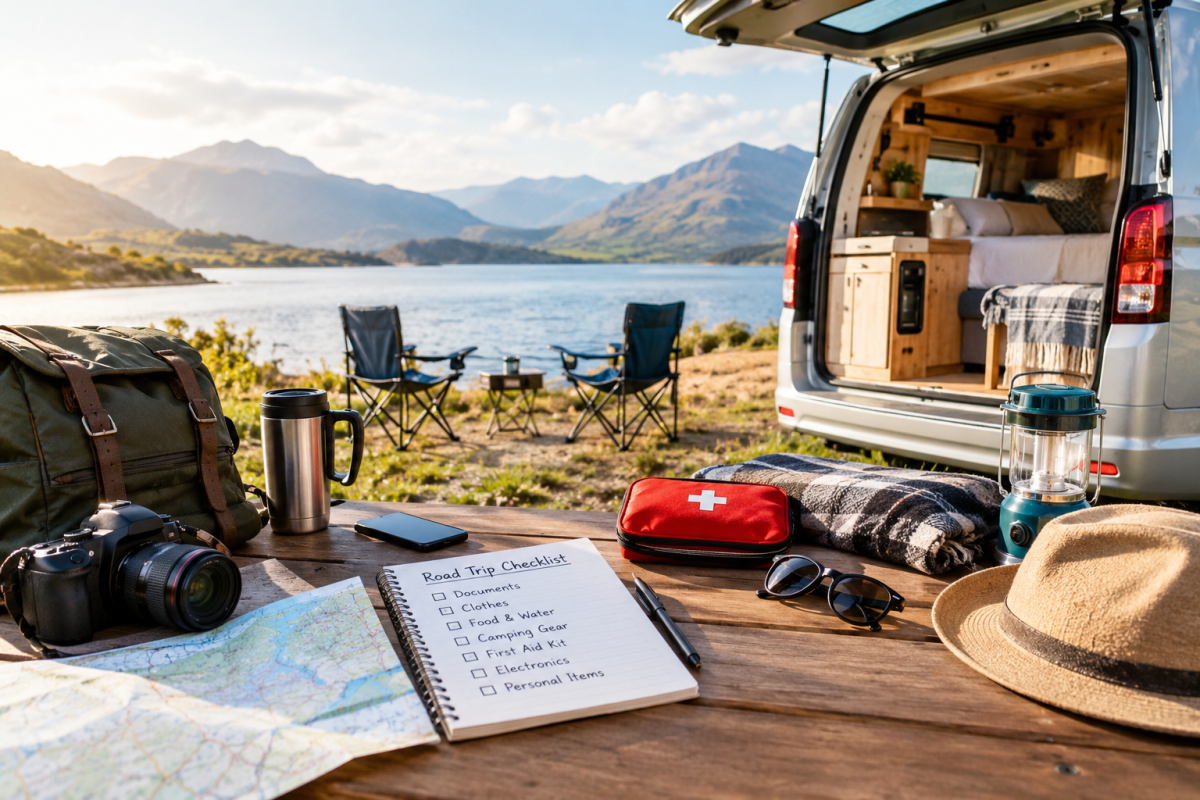
A forgotten pair of sunglasses is easily replaced. A forgotten charger, waterproof jacket or campsite hook-up cable can be a different story.
That is why a little preparation goes a long way before a campervan holiday. You do not need to pack your entire home, either. The aim is to have the essentials within reach while leaving enough space to actually live comfortably inside the vehicle.
Whether you are planning a weekend in the Lake District, a coastal escape in Cornwall or a longer European road trip, this campervan packing list will help you get ready without overloading the van.
Start with what you cannot easily replace
Before thinking about clothes or snacks, deal with the essentials.
Keep your driving licence, booking details, insurance information and breakdown contact details somewhere easy to find. Your phone, charging cable, power bank and any regular medication should also go in your essentials bag rather than disappearing into a storage locker.
Hiring a campervan? Check the vehicle inventory first. You may already have bedding, crockery, cookware, towels or outdoor furniture included in the hire.
It is also worth checking the vehicle’s weight and your driving licence requirements. GOV.UK states that a category C1 licence is required for motorhomes between 3.5 and 7.5 tonnes.
Give the kitchen a simple job
Campervan cooking is rarely about creating elaborate meals. It is more about having something warm and satisfying after a day on the road.
A compact kitchen kit could include:
- Kettle
- Saucepan and frying pan
- Plates, bowls and mugs
- Cutlery
- Chopping board and kitchen knife
- Cooking utensils
- Tin opener
- Food containers
- Washing-up liquid and sponge
- Tea towel
For the first evening, pack a few ingredients that require minimal effort. Pasta, soup, bread, cereal, fruit and snacks are much more useful after a long drive than a complicated recipe requiring twelve ingredients.
The Camping and Caravanning Club recommends checking kitchen equipment, water supplies, cleaning items and electrical arrangements before setting off in a motorhome.
Dress for the forecast’s unreliable cousin
The British weather deserves its own line on your packing list.
Even if the forecast looks promising, take layers. Pack everyday clothes, a warm jumper or fleece, waterproof jacket, comfortable trousers, walking shoes, sleepwear and spare socks.
Keep your waterproof and one change of clothes somewhere accessible. If rain arrives halfway through a countryside walk, you will appreciate not having to unpack the entire van to find a jacket.
Travelling in a Small Campervan? Soft bags can be particularly practical because they fit into narrow storage spaces and collapse when empty.
Do not forget the campsite kit
Your pitch is going to feel much more comfortable with a few useful extras.
Depending on the campervan and campsite, consider taking:
- Levelling ramps or chocks
- Electrical hook-up cable
- Fresh-water hose and suitable connector
- Camping chairs
- Compact outdoor table
- Torch or headlamp
- Spare batteries
- Cleaning cloths
- First aid kit
- Reusable water bottles
Some of these may already be supplied with your hire vehicle, so check before buying anything.
Your pre-drive routine matters just as much. The Camping and Caravanning Club recommends checking tyres, wheel bolts, lights, windows, roof openings, lockers and secured loads before setting off.
When leaving a campsite, disconnect the electric hook-up, stow external equipment, secure cupboards and have a quick look around the pitch. That final check takes little time and can prevent an expensive mistake.
Crossing the Channel? Add these checks
A European road trip needs more preparation than a UK getaway.
GOV.UK advises checking the driving requirements for every country on your route. You may need additional documents or vehicle equipment depending on where you are travelling.
If you are taking a hired or leased vehicle abroad, you will also need a VE103 certificate. GOV.UK recommends arranging this before travelling.
Insurance deserves attention, too. Your existing policy may provide the required minimum cover, but you should check exactly what is covered for your destination, particularly theft, damage and roadside assistance.
Pack for your trip, not every possible disaster
This is where many first-time campervan travellers go slightly overboard.
You probably do not need three pairs of boots, six jumpers and enough kitchen equipment to cater for a village fête.
Instead, consider what you will actually be doing.
A family heading to Devon may need beach towels, children’s essentials and plenty of food storage. A couple exploring the Peak District might prioritise walking gear and waterproofs. Travelling with a dog? Allow space for food, bowls, leads, towels and waste bags.
When comparing Motorhomes for Hire, look beyond the number of berths. Storage capacity, kitchen facilities, bathroom arrangements, vehicle dimensions and included equipment can have a surprisingly big effect on your holiday.
And if you love the idea of a beautiful UK escape but prefer not to manage the practicalities of a vehicle, Luxury holiday homes UK can provide another comfortable way to enjoy a scenic break.
One final check before you pull away
Stand outside the vehicle for a moment.
Look at the tyres. Check the doors and lockers. Make sure the hook-up cable is disconnected. Confirm that nothing is sitting loose outside.
Then ask yourself four simple questions:
Have I got my documents?
Have I got my essentials?
Have I packed for the weather?
Have I checked the campervan?
If the answer is yes, you are ready.
The rest of the trip can unfold naturally. Perhaps you will follow the planned route. Perhaps you will spot a sign for a village you have never heard of and decide to turn left.
That is rather the point of a campervan holiday.
FAQs
What essential items should be on a campervan packing checklist?
Take your driving documents, medication, chargers, toiletries, suitable clothing, food, water, basic kitchen equipment and any campsite equipment not supplied with the vehicle.
What are the most important things to pack for a campervan holiday?
Prioritise essentials that are difficult to replace quickly, such as medication, driving documents, chargers, waterproof clothing and vehicle-specific equipment.
What kitchen and cooking equipment do you need in a campervan?
A kettle, saucepan, frying pan, crockery, cutlery, utensils, chopping board and knife are usually enough for straightforward campervan meals.
What safety and campsite equipment is required?
This depends on the vehicle and campsite. Levelling ramps, hook-up equipment, a suitable water hose, torch and first aid supplies are useful items to consider.