

2-Berth vs 4-Berth vs 6-Berth Motorhomes: Which One Should You Hire?
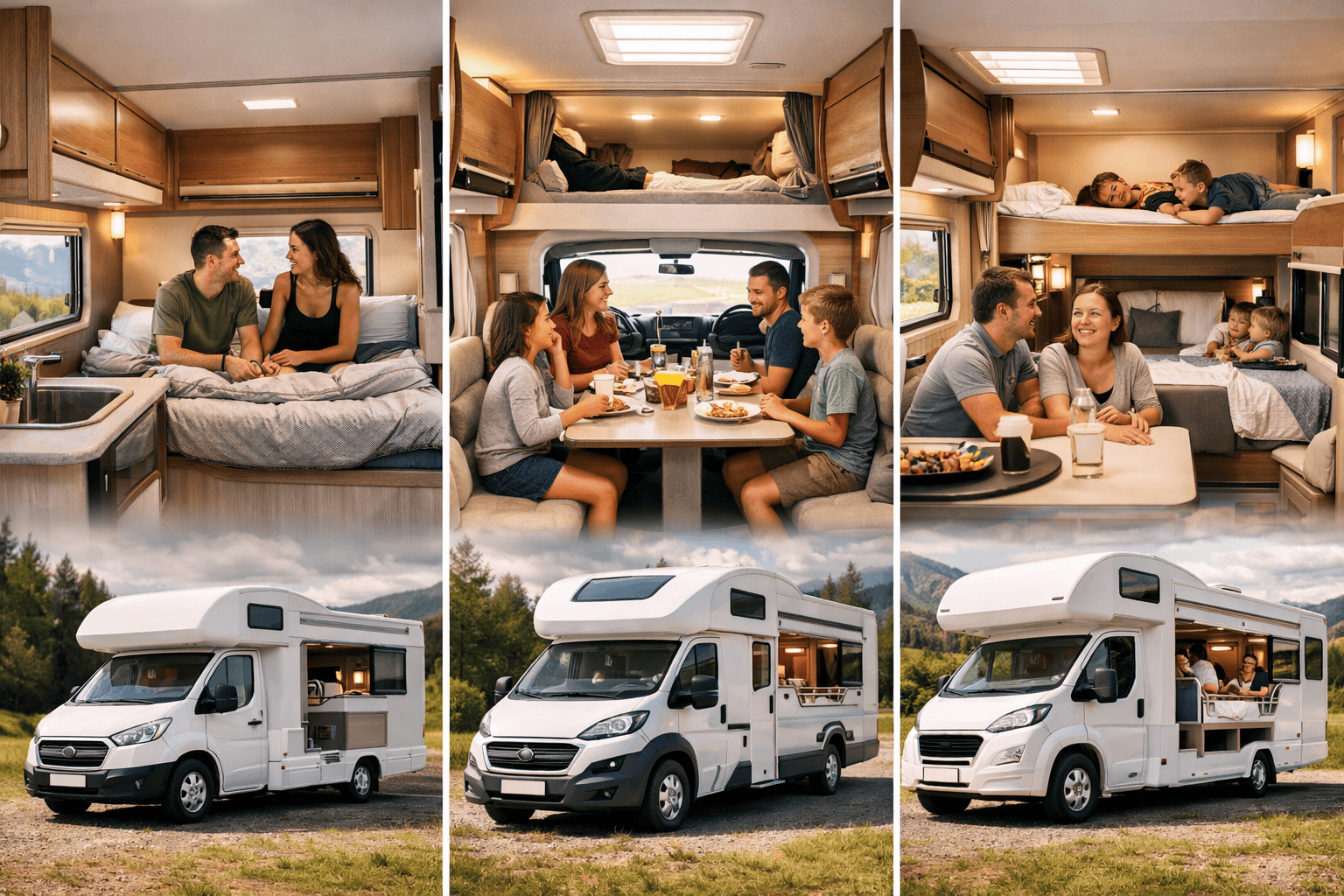
There is nothing quite like the freedom of the open road. One day, you’re waking up to the mist rolling over the Scottish Highlands, and the next, you’re parked up by a hidden cove in Cornwall.
But before you can start planning your playlist and packing the kettle, you have a big decision to make: how many “berths” do you actually need?
If you’re staring at rental listings and wondering about the difference between 2-berth vs 4-berth vs 6-berth motorhomes, you’ve come to the right place.
Choosing the right size isn’t just about how many people are coming along; it’s about your comfort and your driving confidence.
In this guide, we’ll break down the pros and cons of each, highlight some of the luxury motorhomes for hire, and help you find the perfect fit for your next adventure.
What Does “Berth” Actually Mean?
In the world of motorhomes for hire, a “berth” simply refers to the number of people the vehicle is designed to sleep. A 2-berth sleeps two, a 4-berth sleeps four, and well, you get the idea.
However, a pro tip from seasoned road trippers: Don’t just match the berths to the people. If there are two of you but you want a permanent bed and a separate lounge area, a 4-berth might actually be your best choice.
1. The 2-Berth: The Romantic Wanderer
The 2-berth is the ultimate choice for couples or solo explorers. These are often compact, van-conversion style vehicles or low-profile coachbuilts.
- Pros: They are a dream to drive. If you’re nervous about navigating narrow country lanes or parking in a busy seaside town, a 2-berth is your best friend. They are also the most fuel-efficient.
- Cons: Space is at a premium. You’ll often find that your dining area converts into your bed, meaning a bit of daily “furniture tetris.”
2. The 4-Berth: The All-Rounder
It is the “Goldilocks” of the motorhome world. It’s perfect for small families or couples who want that extra bit of luxury. Many 4-berth models feature a fixed rear bed and an electric drop-down bed over the lounge, so nobody has to sleep on the floor.
- Pros: You get a separate living area and often a much larger washroom. It’s the perfect balance between “living space” and “driving ease.”
- Cons: They are longer and wider than 2-berths, so you’ll need to be a bit more mindful of low bridges and tight corners.
3. The 6-Berth: The Grand Explorer
If you’re taking the whole squad or have a gaggle of kids, the 6-berth is the way to go. These are the giants of the road, often featuring bunk beds, over-cab beds, and spacious kitchens.
- Pros: Maximum storage and maximum social space. Everyone gets their own corner, and you usually get the largest water tanks and fridges, ideal for going off-grid.
- Cons: They are big. You’ll need a bit of confidence behind the wheel, and you’ll want to check that your chosen campsites can accommodate larger pitches.
2-Berth vs 4-Berth vs 6-Berth Motorhomes: Side-by-Side Comparison Table
| Feature | 2-Berth | 4-Berth | 6-Berth |
| Best For | Couples / Solo | Small Families / Luxury Couples | Large Groups / Big Families |
| Driving Difficulty | Low (Easy to park) | Moderate | High (Needs more care) |
| Living Space | Compact | Spacious | Maximum |
| Bed Setup | Often convertible | Mix of fixed & drop-down | Fixed beds & bunks |
| Fuel Economy | Excellent | Good | Average |
Looking for Luxury?
If you want to turn heads at the campsite, look for luxury motorhomes. Modern high-end models now come with “soft-touch” interiors, dimmable LED lighting, full-sized showers, and even garages big enough to store a motorbike or a set of e-bikes.
When searching for the most luxurious motorhome, keep an eye out for brands like Rimor. Their “Super Brig” and “Seal” ranges are famous for bringing hotel-quality comfort to the great outdoors.
Where to Hire the Best Motorhomes
For the best models and a fleet that feels brand new, we recommend reaching out to Jepsons Holidays. They specialise in high-spec, well-maintained vehicles that take the stress out of your holiday.
Whether you’re looking for a compact 2-berth like the Helvellyn or a family-sized powerhouse like the Skiddaw or Snowdon, their team can help you pick the layout that fits your itinerary.
Top Tip: If you’re planning a trip during the summer months or a bank holiday, book your motorhome at least 3-4 months in advance. The best models go fast!
Conclusion
Ready to start your journey, whether in 2-berth vs 4-berth vs 6-berth motorhomes? Whether you choose the nimble 2-berth or the palatial 6-berth, the road is waiting. Grab your keys, set the Sat-Nav, and enjoy the ride!
FAQs
Do I need a special license to drive a 6-berth motorhome?
In the UK, most motorhomes under 3,500kg can be driven on a standard Category B (car) license. Many 4 and 6-berth models fall into this category, but always check the vehicle’s weight before hiring!
Is it hard to cook in a motorhome?
Not at all! Most modern hires from places like Jepsons Holidays come with 3-burner hobs, ovens, and large fridges. It’s basically a compact apartment on wheels.
Can I take a motorhome off-grid?
Yes! Most luxury models have solar panels and large leisure batteries. However, you’ll eventually need to stop at a campsite to refill your fresh water and empty your “grey” water.
What is the difference between a 'fixed bed' and a 'convertible bed'?
A fixed bed stays as a bed all day. A convertible bed is created by rearranging the dining seats and table at night. Fixed beds are much more convenient but take up more floor space.
Are motorhomes pet-friendly?
Many rental companies, including Jepsons Holidays, offer specific pet-friendly vehicles. Just make sure to mention your furry friend when booking so they can give you a van with hard-wearing floors!